

GA Landscaping & Masonry LLC provides seasonal snow plowing for selected residential and commercial properties in Norwalk and nearby Fairfield County communities. Service availability depends on the property, route, requested scope, access, equipment requirements, and seasonal scheduling capacity.
Before winter service begins, the agreement should identify the plowable surfaces, accumulation trigger, visit expectations, approved snow-storage areas, known obstacles, and any additional work. Walkway shoveling, salting, sanding, pretreatment, or ice control should not be assumed unless specifically included.
Snow Plowing, Shoveling, and Ice Control Are Different Services
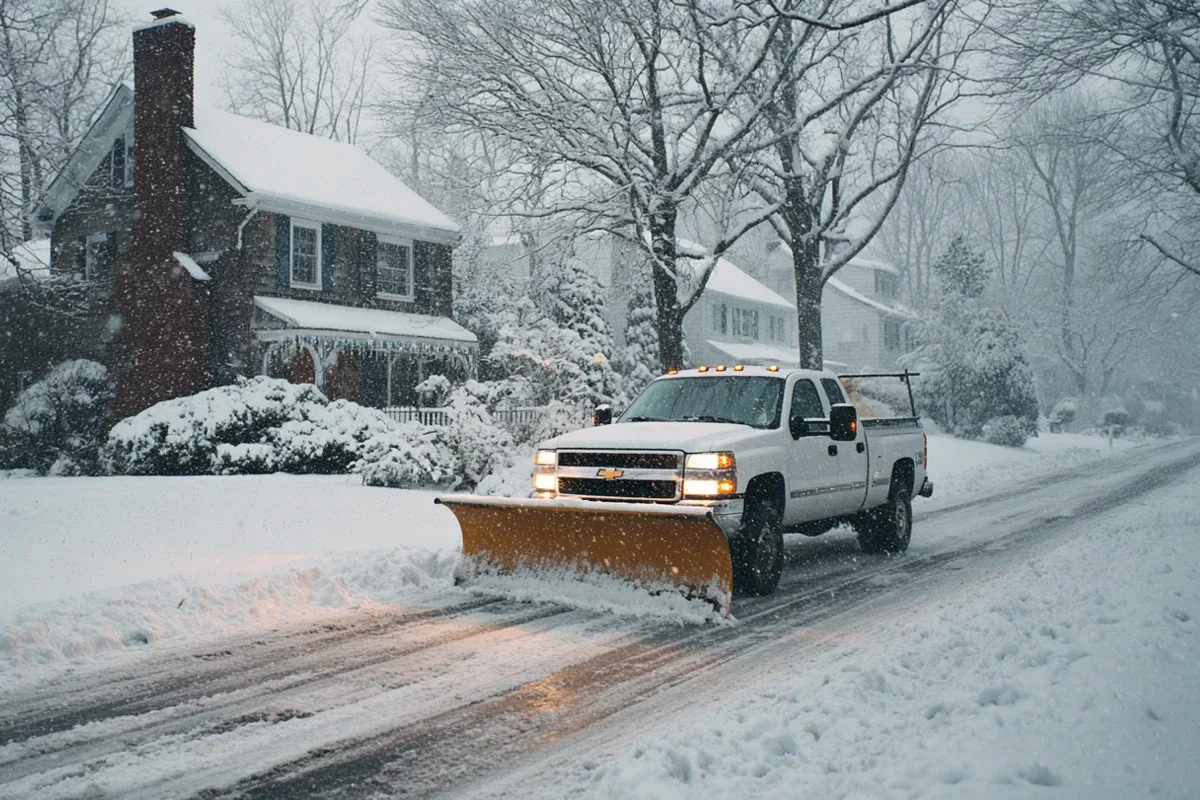
Plowing moves accumulated snow from vehicle surfaces using appropriate equipment. Walkway or entrance clearing requires separate labor, while salting, sanding, pretreatment, and deicing involve different materials and timing. A clear agreement identifies which surfaces and services are included for the property.
Snow Plowing for Different Property Types
Residential driveways
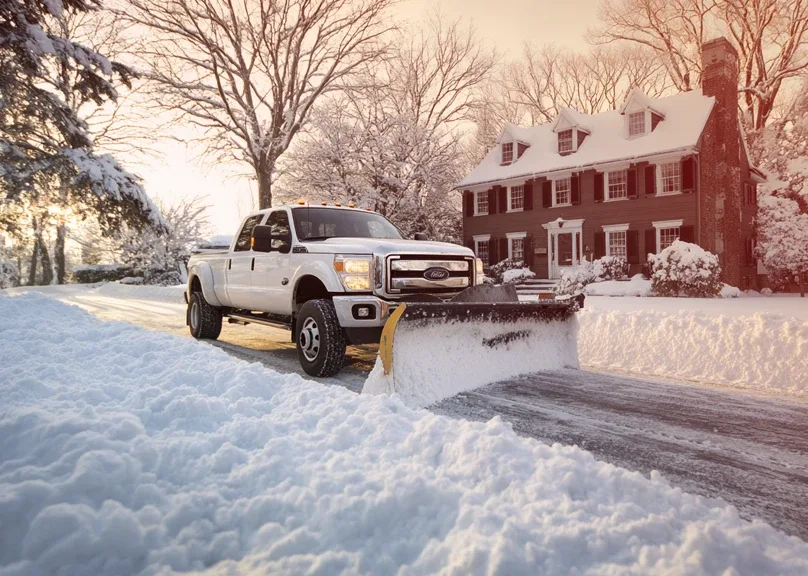
Plowing planned around driveway width, slope, parked vehicles, garage access, surface condition, and available snow-storage areas.
Parking and access areas
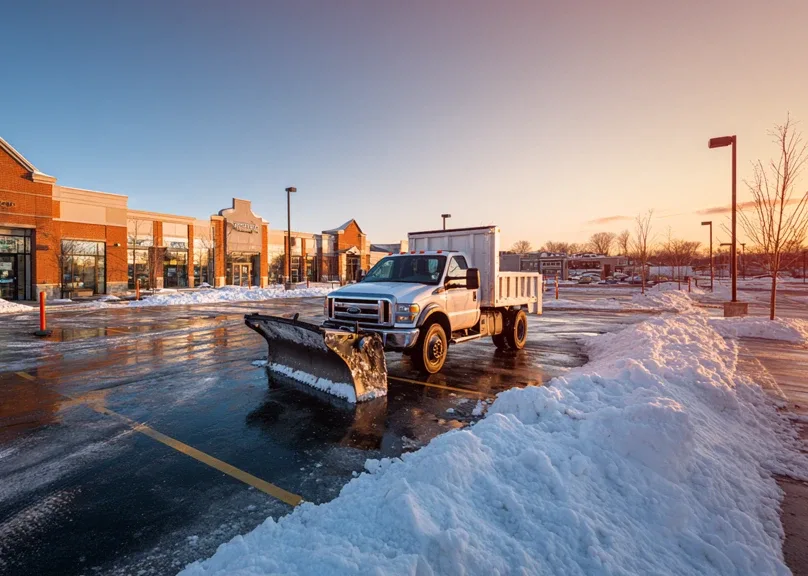
Defined vehicle routes, parking sections, entrances, loading areas, and pile locations based on the agreed commercial scope.
Private access routes
Selected private roads or longer access areas evaluated for width, turns, grade, drainage edges, obstacles, and equipment suitability.
What the Snow Service Agreement Should Define
- Every driveway, parking section, access route, or other included surface.
- Accumulation trigger and how drifting or municipal plow deposits are handled.
- Whether service is per event, seasonal, or based on another stated arrangement.
- Expected visits during long storms and any post-storm return work.
- Approved snow-storage locations and areas that must remain unobstructed.
- Whether shoveling, salting, sanding, pretreatment, or deicing is included.
Preparing the Property Before Winter Service
Move vehicles, trailers, containers, decorations, hoses, and portable items away from agreed plowing areas. Mark curbs, islands, drains, low walls, landscape edges, utilities, speed bumps, and other features that may become hidden by snow. Gates and access routes should remain operable.
Identify existing cracks, loose pavement, gravel transitions, pavers, drainage edges, and sensitive surfaces before the season. Snow placement should also be planned so piles do not block visibility, drainage, fire access, neighboring property, or areas required for later storms.
Our Seasonal Snow Plowing Process
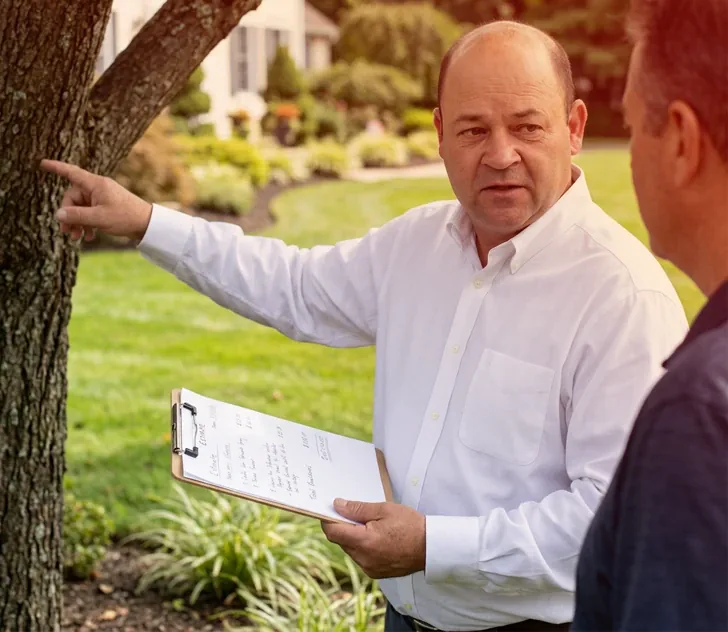
- Property review: We evaluate the surfaces, route, access, slopes, obstacles, and potential snow-storage areas.
- Scope and service terms: The proposal identifies included areas, trigger, pricing method, visits, and any additional work.
- Preseason preparation: The customer marks hidden features, documents sensitive areas, and keeps the work zone accessible.
- Storm service: Plowing is performed according to the agreed scope, route conditions, weather, and property access.
- Follow-up when included: Additional visits, widening, cleanup, or ice-control work occur only as stated in the agreement.
Weather-dependent timing: snowfall rate, storm duration, traffic, road conditions, property access, and earlier route stops can affect arrival and completion times. Snow plowing does not guarantee bare pavement or eliminate every slippery condition.
Snow Plowing Coverage Near Norwalk
Seasonal routing may include selected properties in Norwalk and nearby communities such as Westport, Wilton, New Canaan, Darien, Stamford, Weston, Fairfield, and Greenwich. Availability must be confirmed for the exact address before the season.
View all service areas and provide the complete property address when requesting availability.
Request a Snow Plowing Estimate
Share the property address, surfaces to be cleared, approximate dimensions, access conditions, desired trigger, service frequency, snow-storage areas, and any requested additional work.
Get a Free Estimate Call (203) 952-8448Frequently Asked Questions
Clear answers about planning, access, scope, and what to expect from this service.
Pricing depends on the property type, plowable area, access, slopes, obstacles, snow-storage space, service trigger, visit frequency, storm conditions, travel route, and whether any additional work is included. The estimate or agreement should explain how the service is priced.
Only the surfaces identified in the agreed scope should be considered included. Driveways, parking areas, private access routes, loading areas, walkways, entrances, and return visits can require different equipment or labor, so each area should be listed clearly.
There is no universal trigger for every customer. The accumulation threshold, whether drifting or municipal plow deposits are included, and whether multiple visits may occur during a longer storm should be defined in the service agreement.
Routes and timing can be affected by snowfall rate, storm duration, road conditions, traffic, equipment access, prior stops, and changing weather. Any priority requirements or time expectations should be discussed before the season, but weather-dependent work should not be presented as an exact arrival guarantee.
No additional ice-control service should be assumed. Salting, sanding, deicing products, pretreatment, walkway work, and return treatment should be separately identified in the estimate or contract when offered. Snow plowing alone does not guarantee bare or ice-free pavement.
Move vehicles and portable items from the agreed work area, mark low walls, curbs, islands, drains, utilities, and other hidden edges, keep gates operable, and identify approved snow-storage locations. Existing surface damage and sensitive features should be discussed before service begins.